

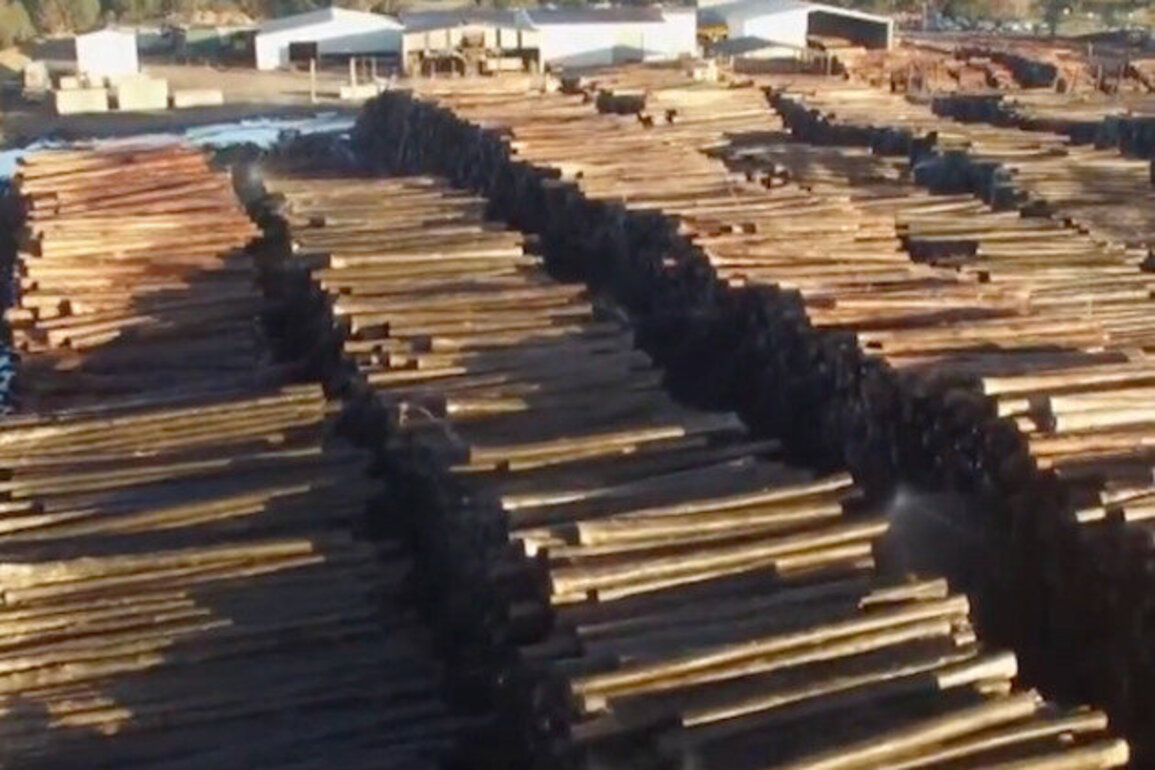
Tasmania has become Australia's new logging hotspot, wasting public money while destroying our native forests.Tom de Kadtreports.
LAST WEEK, the Australian Conservation Foundation releasedresearchthat showed that Australia has destroyed most of its forests since colonisation. Only 34% of the continents mature forests now remain.
With native forest logging ceased in WA and reduced in VIC, Lutruwita/Tasmania is now Australias logging hotspot. The ACF data echoes 2021 findings by Resource Watch, which showed that the only intact forests that remain in Lutruwita/Tasmania are those within the Tasmanian Wilderness World Heritage Area. Everywhere else, Tasmanias forests are degraded, fragmented and becoming more so. So much for the claimed - and much contested - sustainable forest management of the Tasmanian Governments logging agency, Forestry Tasmania (trading as Sustainable Timber Tasmania).
Its not clear if Forestry Tasmanias Chair,Rob de Fegley, believes what he says, but its clear that almost every paragraph in his recent article in Tassie local rag,TheMercury('Our forestry actions are rooted in responsibility', 22 October) was misleading. But then PR, greenwash and deception are how the native forestry operates. The reality is, as its always been, that logging globally-significant native forests destroys more value than it creates.
Australias war on nature leading to environmental collapseBulldozers roll, koalas perish and governments look the other way as extinction becomes policy.
In 2020, this reality was temporarily breached. Forestry Tasmania (FT)failedits second attempt to gain Forest Stewardship Certification (FSC), the gold standard of forestry management. Ten major fails included logging threatened species habitat, mismanagement of conservation values across entire landscapes and logging old-growth forests.
Despite this failure, Responsible Wood, the weaker certification scheme, tells the markets and consumers that FT is sustainable. Illegal logging? Scientific evidence of swift parrot habitat destruction? A report showing logging is Tasmanias number-one source of CO2 emissions? Zero action. Nothing distracts Responsible Wood from greenwashing Tasmanias least sustainable and most unsuccessful industry.
In 1977, prospective head of FT,Evan Rolley, was just a humble forest-destroying footsoldier. No doubt inspired by Darth Vader from the Star Wars debut, he purchased an incendiary laser cannon. Yes, really. It was a waste of time and money and didnt work. But if Rolleys dream had come true and he could laser-blast Tassies beautiful forests today, Responsible Wood would tick it off as sustainable.
Responsible Woods forestry standard so-called has four sustainability criteria.
Theres cultural sustainability. But the Palawa-Pakana people of Lutruwita/Tasmania havent given their permission for their forests, on still-stolen land, to be logged. Nor has their permission been sought.
Then theres environmental sustainability. But as well as the clunking FSC failures mentioned above, the 2022 report,Tasmanias Forest Carbon: From Emissions Disaster to Climate Solution, showed that logging Tassies forests is the States biggest source of CO2 emissions. Did Responsible Wood investigate? Of course not.
The third criterion is social sustainability. But we know from the industrys own research,leakedin 2018, that 65% of people in rural areas and 70% in urban areas oppose logging. In the latest iteration of this lack of public support, Central Coast Council, which incorporatesDial Rangeforest, has voted to oppose local logging. Good on them. And Australias native forest sustainable yield - and with it, its number of employees - has been in structural decline for years.
My favourite criterion is the fourth, economic sustainability. But it costs FT more public money to log our public Aboriginal forests than it gets from the small amount of product that makes it to market.
Pre-eminent forest economist John Lawrence recently ran thenumberson the spectacular Dial Range forest, which is scheduled to be (sustainably!) clearfelled. His profit and loss analysis for the 20-hectare coupe included: Proceeds, $420,000; Harvest & Cartage, $255,000; Roading, $20,000; Replanting $30,000; Wages & Overheads, $127,000; Cash Loss, minus $12,000.
This is Forestry Tasmanias basket-case economics in a nutshell: wasting public money to make a financial loss, while destroying public Aboriginal forests. These wasted precious public funds are diverted from housing, health and education.
Like ethics for arms dealers and health tips for smokers, sustainability criteria for logging are nonsense. Logging is the opposite of sustainable. Hence the need for greenwash, PR and spin. And public land and public money. Meaningless though they are, FT fails to meet any of Responsible Woods sustainability criteria.
Aotearoa/New Zealand protected its forests 25 years ago. Western Australia and Victoria more recently. Today, New Zealand has a thriving plantation-based forestry industry. Anything industrial is imperfect, but at least its forests can thrive and public money isnt wasted. Amazingly, New Zealand did this without compromise, art-wank, forest chandeliers or sparkly stilettos. Yes, this is a reference to Mona museKirch Kaechele, who is advocating not for an end to the logging, but for its continuation.
Cost of Australia's wildlife destruction immeasurablePolitical ignorance toward the ongoing environmental destruction of our country is causing devastation that cannot be overestimated.
New Zealand'sPureora Forest Parkis comparable to Takayana/Tarkine. The difference is that its protected, whereas were still logging - and mining - Takayna. And comparable to our Franklin Dam campaign, in the 1970s, Kiwi environmentalists succeeded in turning Pureora from a logging zone into a vast national park.
Researchby New Zealand University of Waikato found that:
Similarly, Tasmania will be a richer state when it protects its native forests. Richer because the public money that Forestry Tasmania loses every year will stop. Richer because we will be free to visit our forests again. Richer because our forgotten tourism infrastructure throughout these State forests can be uncovered and restored. Richer because we can right the wrongs of the past and return the forest estate to its Rightful Owners. Richer in employment opportunities because there is a job-rich future in forest tourism, conservation, regeneration, and science than a declining logging industry can dream of. Richer because our embryonic big tree tourism can take off. And richer because regenerating ecosystems can once again carry us to a brighter future.
Dont forget, the Tasmanian Wilderness World Heritage Areageneratesclose to a billion dollars annually, simply by virtue of its protected beauty. Tassie is a quarter of a century behind our friends across the ditch, but we can catch up, maybe even overtake, and reap the rewards. The evidence shows theyre ready and waiting.
Tom de Kadtis a freelance journalist and forest conversationalist based in Lutruwita/Tasmania.
Related Articles
- High Court logging appeal decision may be a game changer
- The absurd evil lies used by the logging industry to justify its existence
- War declared on logging industry
- Governments turning deaf ears on logging outrage
- Politicians persist in plundering the planet for profit