

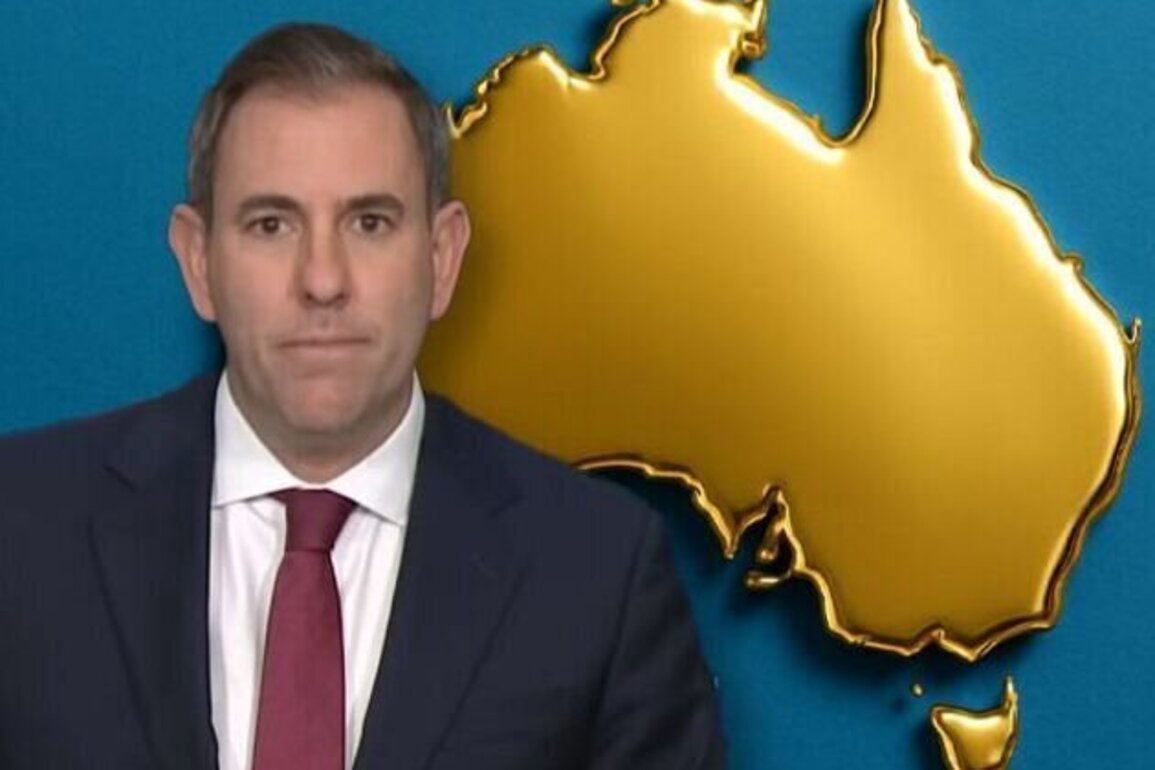
The numbers confirm Australias economy is responding to global conditions better than most, asAlan Austinreports.
THIS WEEKS number is 46.
Australia has now had itsjoblessrate below 4.6% for 46 months. Thats the first time that has happened since 1946.
The Australian Bureau of Statistics (ABS) has announced that total taxation revenue in 2024-25 is up by $46 billion over last year. Coalexportsin September were a robust $5.7 billion, bringing total export value for the year to $46 billion.
Voters evidently approve of all this good economic news, with opinion polls showing Labour nowleadsthe Coalition 54 to 46.
Jobs expanding against the global trend
TheAlbaneseGovernment has now added 1.16 million jobs to bring totalemploymentto 14.64 million in September an all-time high. See chart below.
(Data source:Trading Economics)
How long has Australia now had total jobs above 13 million? Also 46 months.
Actually, that is no surprise, as in normal times, every month should show a new record with natural growth of the population and the economy. But these are not normal times. Of the 38 wealthyOECDmember countries, only 11 currently haveemploymentnumbers at maximum levels. All the others have shed jobs in recent months, some of them disastrously. These includeTrumps USA,Erdoans Trkiye and New Zealand now under conservative management.
New Zealand is now a mirror image of Australia, where, after May 2022, graphs showing ever-worsening outcomes turned around after Labor was elected. In New Zealand, several economic outcomes have conspicuouslydeterioratedsince the National Party took charge in November 2023. See chart below.
(Data source:Trading Economics)
Australias Job participation has been remarkably stable, having moved within the very narrow band of 66.6% to 67.2% for the last 30 months. IA hasarguedthe optimum range is between 65% and 67%, as levels lower than that indicate discouraged jobless have left the workforce while higher numbers signal students or retirees forced by poverty back to work.
So how many months has job participation now been above 65%? The answer is 46.
The number of workers employed full-time or part-time who need to work more hours is gradually reducing. The underemployment rate was 5.9% in September. Thats down from 6.3% in September last year and well below the 9.1% level in September 2021 near the end of the dismal Coalition years.
Prices rising worldwide
Most of the 38 wealthy OECD economies are now coping with a surge ininflation. Exceptions are Belgium, Finland, Israel, Poland and Switzerland which have steady prices, and Costa Rica, which is currently experiencing deflation.
Over the year to September, inflation jumped from 1.8% to 4% in Austria, from 0.7% to 2.7% in Ireland, from 1.5% to 3% in Spain, and from 1.7% to 3.8% in the United Kingdom. The official rate in the USA was 3.0% in September, up from 2.4% a year earlier, though that number is almost certainlyfalsified.
Australiasincreaseover that year from 2.81% to 3.24% was relatively mild but enough to stymie the Treasurers hopes of another interest rate cut before Christmas.
Although Australias monthly headline inflation rateticked upto 3.47% in September, the trimmed mean remained at 2.8%, within the optimum band of 2% to 3%. That makes ten months within the band, the longest streak since the monthly series began in 2018. In fact, in the entire 85 months since this series started, the trimmed mean only managed to sneak into that elusive range six times before the current ten-month streak.
Doomsayers proved wrong again as businesses expand and prosperOfficial data on Australias economy continue to undermine the Albanese Governments critics.
Living standards still rising
Numerous indicators confirm the Coalitions cost of living crisis is well behind us aswagesfor the majority are rising faster than inflation, as are pensions and benefits. How many indicators? Oh, around 46.
Spendingon dining out has been above 12.5% of all retail sales for six months straight to September. Thats a first. Spending on recreation and culture has been above 17% for the last seven months another first.
Australians made more than 8.4 millionoverseas tripsthis year up to the end of August. Thats 10.2% higher than last year which was a record then and 31.2% higher than the same period in 2023.
Sales of new cars and light aircraft continue apace, with 100,658 new vehiclesdeliveredin October. Thats up 0.7% on the same month last year.
Australiansimported$1.07 billion worth of perfumes and cosmetics in the September quarter, a new record, while other luxury imports including artworks, clocks and watches and gold coins are also at or near record values.
Public sector wagesincreased7.6% in the year to June, according to last weeks ABS figures, slightly below the 8% annual growth in 2023-24. This reflects both underlying wages growth driven by new enterprise agreements and more jobs.
Whether the positive real wage rises since the 2023 third quarter continue henceforward will be indicated in two weeks with the September quarter outcomes.
Big picture
Global conditions are still impacted negatively by regional conflicts, inflation volatility, ageing populations, uncertain and generally low economic growth and Trumps destructive tariff policies.
It remains the case that many Australians are still struggling, as TreasurerJim Chalmerscontinues to acknowledge. But the dataconfirmsthe disadvantaged are proportionally fewer than ever and nowhere near as poor as they were three years ago. The middle and upper middle are steadily gaining financially and the billionaires, while not advancing as rapidly as in the USA or other countries where governments primarily serve the rich, will somehow struggle through.
So, how many Monday columns has IA run with data showing Australias improving economy since the 2022 election? 63.
Alan Austinis an Independent Australia columnist and freelance journalist. You can follow him@alanaustin001.
Related Articles
- Doomsayers proved wrong again as businesses expand and prosper
- Sorting through the economic debate Australia is well placed
- Albo and Dr Jim steadily reduce poverty and homelessness at last
- The strange world of nut-job economics
- Some Australian families are struggling, but fewer than ever before